Good things grow slowly.
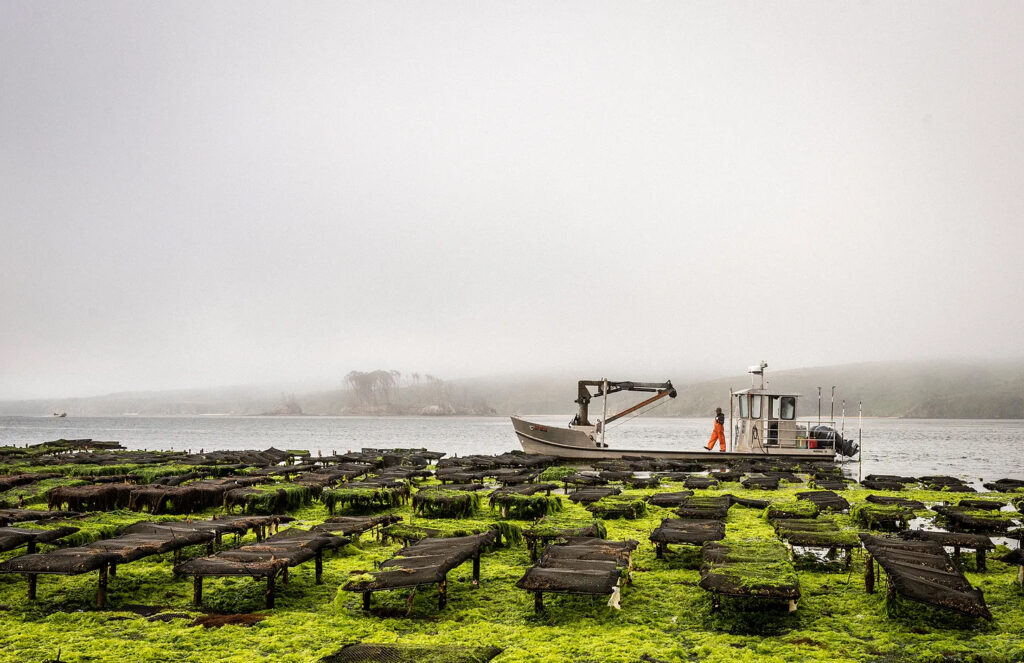
You’ll find that written on our website. It describes our approach to cultivating oysters, but also the journey we’ve been on as a business. It took us a long time to get Hog Island to where it is today, to become financially stable.
Now, with 20/20 hindsight, I can see all the inflection points. The moments where things could easily have gone the other way. There was a time in the 90s, after we made the mistake of giving away half the company to an investor, when I almost closed Hog Island down completely and moved to Costa Rica!
The truth is when you’re running a business, you make lots of small decisions that have unintended repercussions. The decisions we made in those early years took us to where we are today, but the journey was never smooth.
Low Tide Widows
My business partner, Michael Watchorn, and I started Hog Island Oyster Company in 1983 with nothing more than $500 and a bunch of scavenged equipment.
Raised on the East Coast, I had grown up hunting and fishing for clams and initially came out West for a semester of my Marine Biology degree. I thought it’d be a fun place to live for a couple of years so I moved back after college and fell in love with oyster farming; the connection you have to the environment, that sense of place.
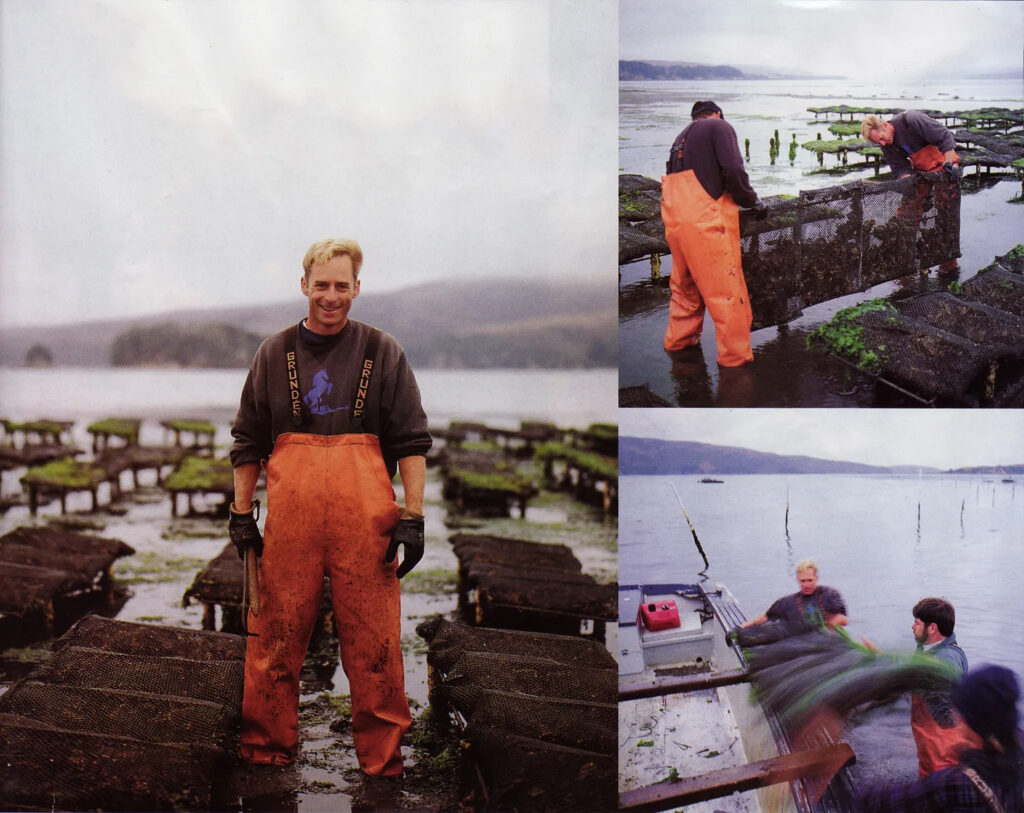
Getting the farm going was a real grind. I was living in Santa Cruz and working for our distributor, Billy Marinelli, a couple of days a week. I would wake up on Monday at 3.30am, drive to the airport to pick up product, work for him all day, sleep on his apartment floor, work for him on Tuesday, and then make the long drive up to Tomales Bay where our five-acre farm was. Michael had a place out there with a little loft where I’d sleep. I’d work two days there and then get up early Friday, head back to San Francisco, work the whole day on Friday, and then drive back down to Santa Cruz. That was my week from ‘83 to ‘85.
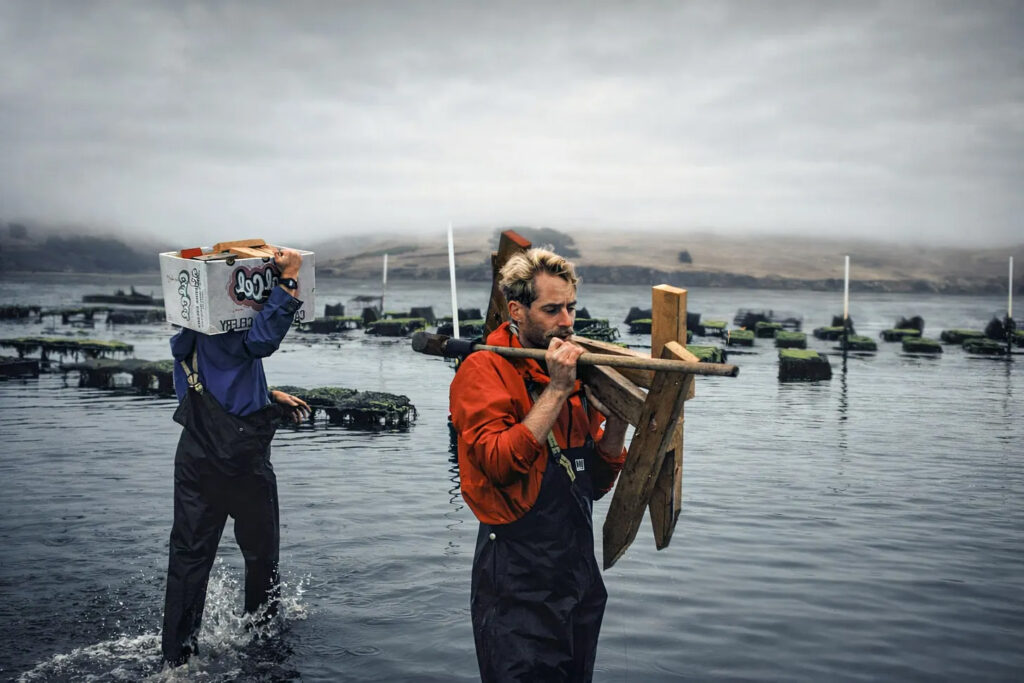
They were lean years and there wasn’t a lot of time or money. I didn’t take a salary until ‘88 and wasn’t able to travel or even go back to the East Coast to see my family.
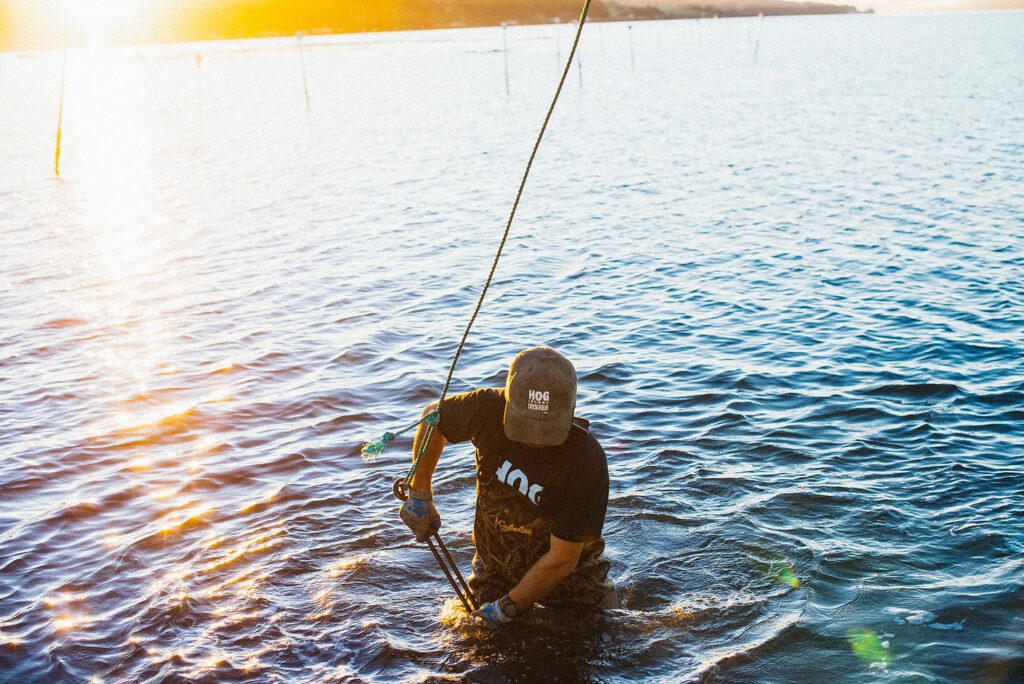
In winter, the lowest tides often come at night so you’re working in the darkness. We used to say that our wives were low tide widows. I could’ve walked away but I was very stubborn. And there was always just enough encouragement to keep going.
Getting on the Map
One of our early breakthroughs came through Billy, who had good connections on the Californian food scene. In the mid-80s it was really coming up. You had Alice Waters at Chez Panisse, Judy Rodgers at Zuni Cafe, Patty Unterman at Hayes Street Grill.
These people were respected, and they were doing something unique. Billy went to them and said, hey these are friends of mine who are also doing something different. They got it: we were a local oyster company producing a high quality product.
One smart thing we did was insist that they put them on as Hog Island oysters, not Tomales Bay oysters or whatever else. We felt we were doing something worthy of distinction. These restaurants had food writers coming in and suddenly our phone started ringing off the hook – “I had your oysters at Chez Panisse. Can I come out there to see what you’re doing?”
Hog Island became synonymous with the Californian food movement and that’s really what put us on the map. For the first twenty years of our business, we had no PR or marketing. There’s a number of companies on the West Coast that will tell you the same thing: if you’re producing high quality food, marketing’s not an issue.
Rainfall Closures
By 1987, we knew what we were doing. The market seemed to be there and we could see the potential for scaling up. But, as I always tell people, this business will kill you with potential. Because it’s not easy going from A to B. It’s not easy doubling your production and growing more oysters. We’re still trying to do it.
There were times when the oysters weren’t growing as quickly as we wanted, or we had to cut back on what we were selling to people. We had customers on quotas, limiting how much they could buy, and we were thinking, gee, we could do with the sales.
But we knew sending out bad quality oysters would come back to bite us so we just had to stop for a couple of months. Restaurants didn’t like having to take them off their menus, but they understood.
At the same time, we were also trying to establish national sales. We were told that, to be competitive, we needed to sell for a little bit less to account for the freight costs. And we did that for a few years. But then we couldn’t even grow enough oysters for the local market.
Rather than just cut them off, we decided to do away with the discount so that sales would drop – and they did… for two weeks! I was kicking myself thinking, I should have done that years ago!
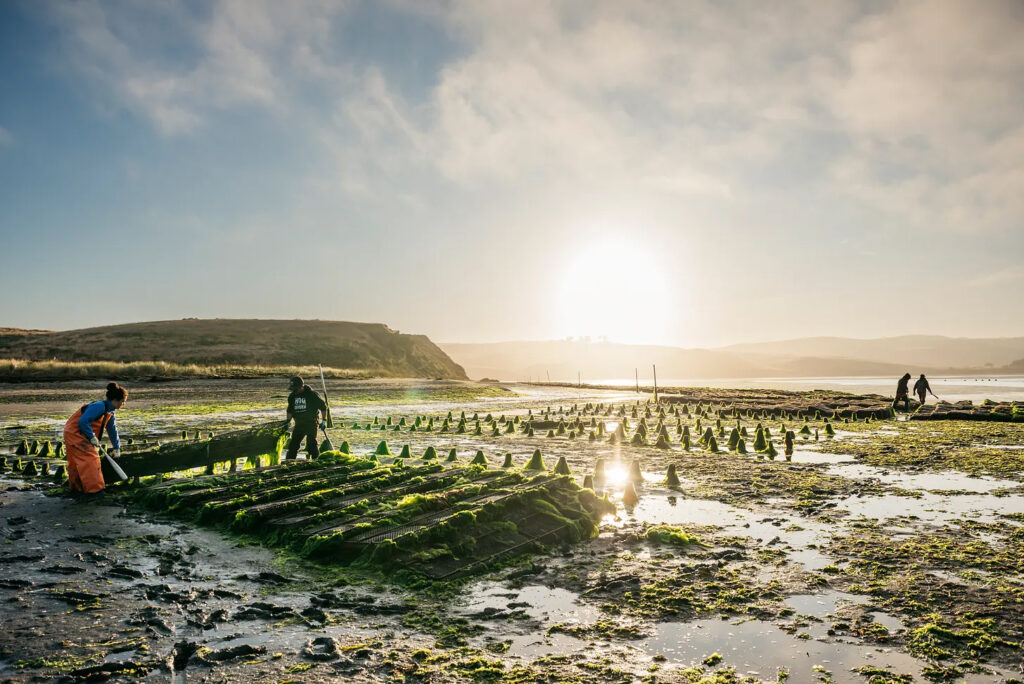
At that time, we were only really harvesting oysters from October to May. We didn’t have the various growing areas we have now that allow us to harvest all year round. We had one five-acre plot, so it really mattered.
The problem was, with winter comes rain. And with rain comes closures, if it’s heavy enough to flush mud into the bay. It wasn’t wiping out production, but it was harming cash flow – especially when it happened during the holiday period when demand peaks.
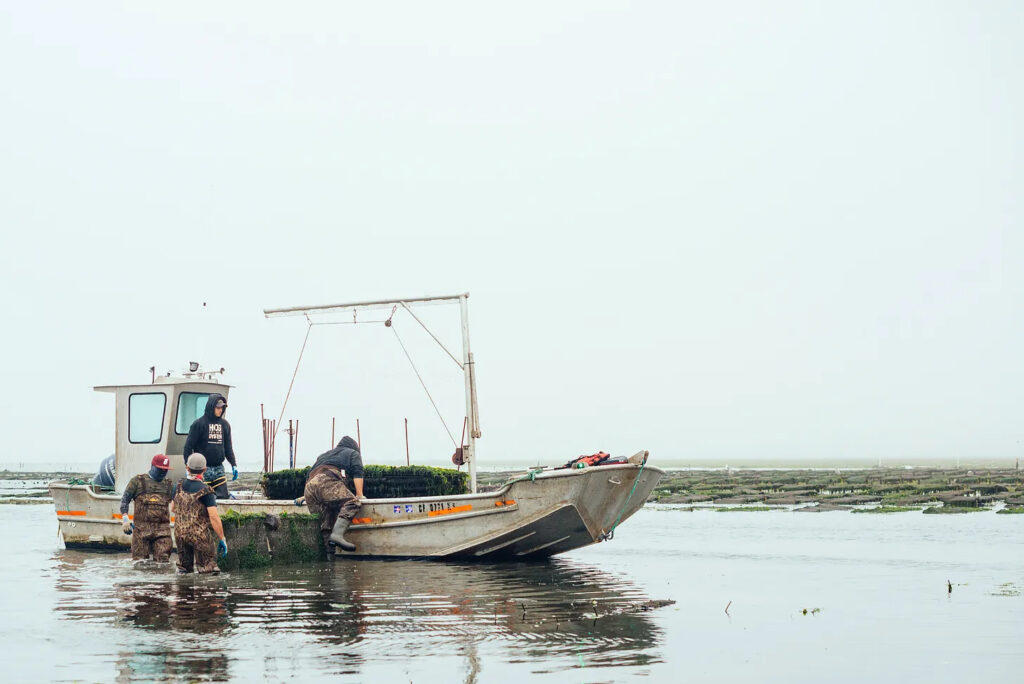
Sometimes we’d close for five days and then it’d rain again on day four, extending the closure for another five days. In those cases, we were having to lay people off and eat our own oysters for dinner because we couldn’t afford anything else. It crippled us.
The Beast
In 1988, we brought in Terry Sawyer. Terry had the technical expertise to put together the wet storage system which would allow us to harvest ahead of rainfall closures and navigate the winters.
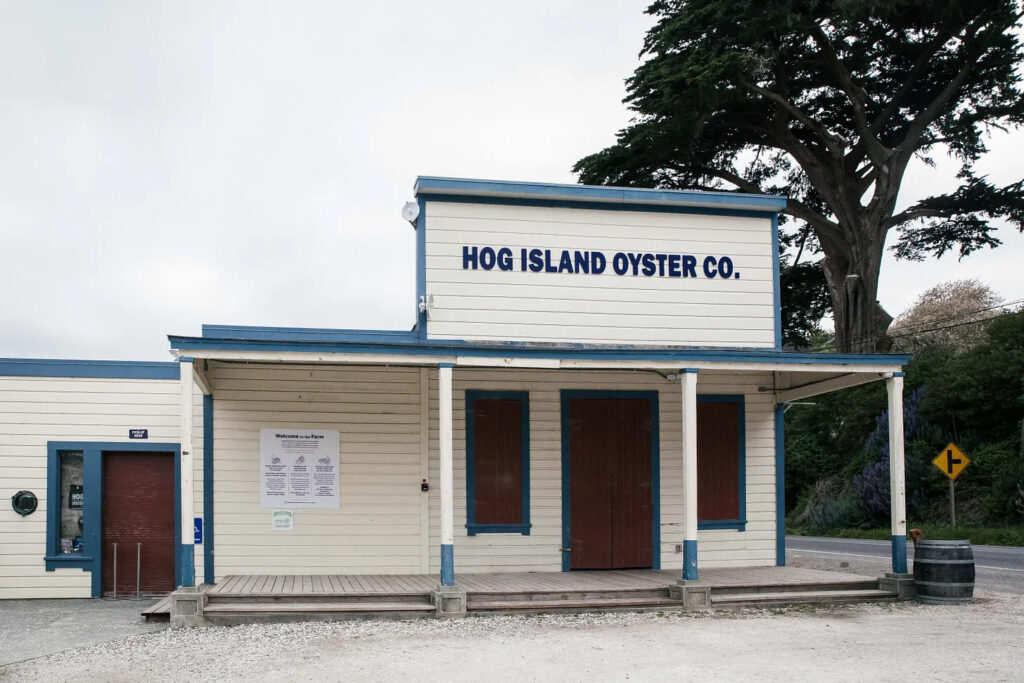
Installing the system had an unintended consequence. We realised: we have live tanks here. We’re on Highway One. Let’s open up the gates and get people in.
From there, it was game on. Investor issues aside, we continued to build and in 2003 were approached by the Ferry Building in San Francisco to become one of their anchor tenants.
We weren’t sold on that project to begin with. It was a funky part of the city and we thought it was going to take a while for people to realise what it was. We were talking about taking 500 square feet, but somehow they convinced us to take 1,000 square feet.
That move changed things dramatically. We blew through our five-year projections in the first year. I got tendonitis in both my elbows from shucking oysters. Even now, we call it The Beast. We have a lot of people showing up there with suitcases straight from the airport. And if they are really serious they come out to the farm, too.
To be honest, I never wanted to have a big company. Three hundred employees – it’s a different thing. On the other hand, I think we always knew we wanted to do something different and integrated.
I wish I was a little bit younger because I’m still excited about what we could do in the future. There’s lots of potential to do more, with other seafood. At the same time, I’ve worked a lot. Maybe I could start taking it a little easy.
By John Finger, as told to Isaac Parham.
Photography courtesy of Remy Hale, Ed Anderson & Hog Island Oyster Co.